What is cable pooling?
With cable pooling, several installations share one grid connection. According to the Netherlands Enterprise Agency (RVO), these can be generation (such as wind and solar parks), storage (such as batteries), consumption and conversion (such as electrolysis).
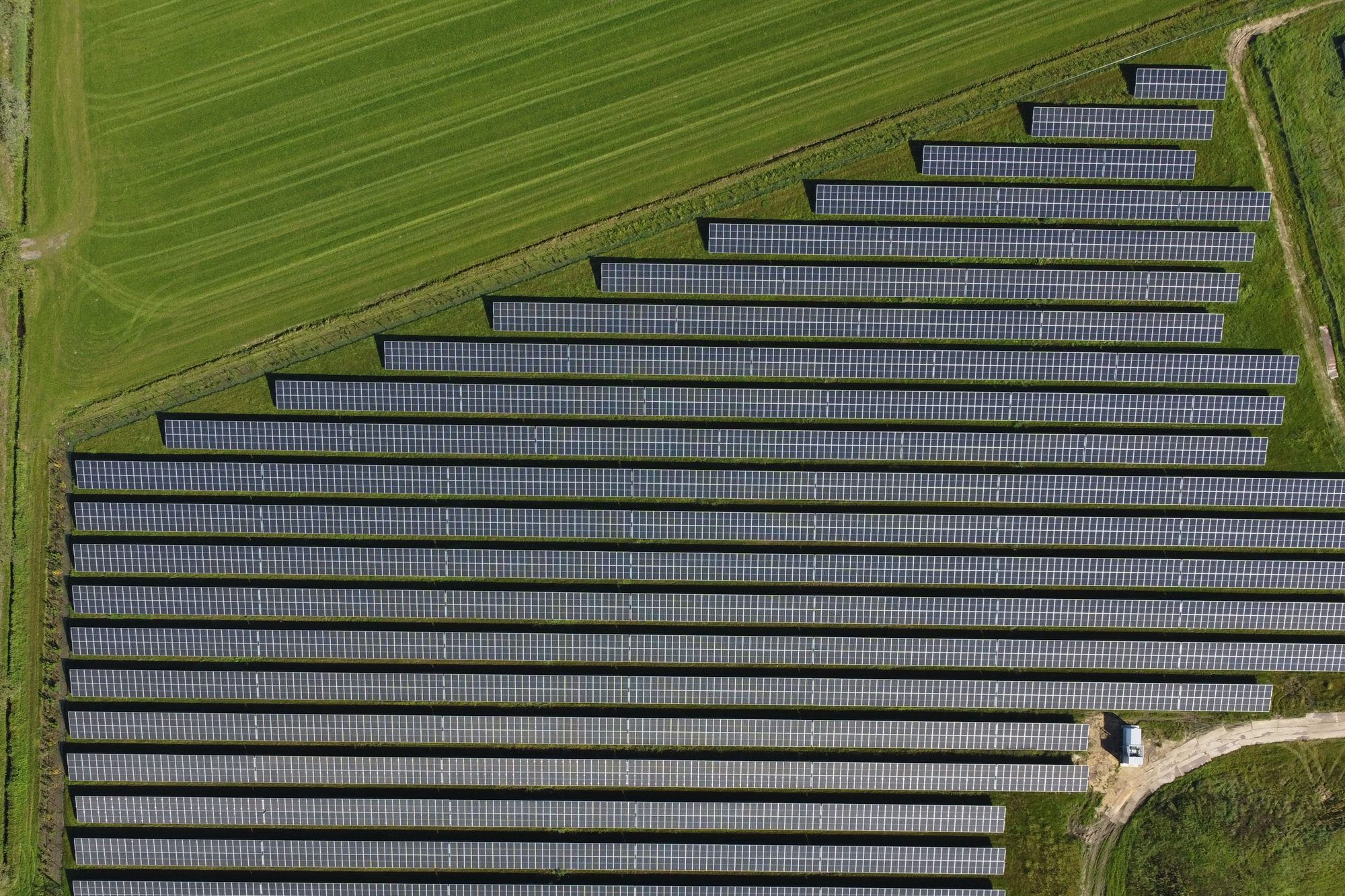
The idea is simple. A wind or solar park uses its full connection only part of the time. Our own solar park in Dalfsen used just 9% of the capacity of its 6 MW connection in 2024. A battery can use the same cable for the rest of the time, without adding load to the grid.
For the grid, little changes: no new connection is added and the contracted maximum capacity stays the same. That is why sharing can work even in areas where a new connection would take years.
What was the position before, and what is it now?
You may read conflicting articles because the rules changed within a short time. Under the old Electricity Act 1998, the exception for sharing a connection applied only to wind and solar parks. A battery was not covered. A bill that would have changed this was rejected by the Dutch Senate (Eerste Kamer) in February 2024, according to law firms such as Dirkzwager and Loyens & Loeff.
On 20 November 2024 the regulator ACM gave the green light. It ran ahead of the Energiewet and made cable pooling with batteries, electrolysers and other users possible straight away. Parties had to notify the ACM.
Since 1 January 2026 it is in the law itself. Article 1.4(3) of the Energiewet expressly covers installations for the production, storage, conversion or consumption of electricity. The Energy Decree (Energiebesluit, article 1.2) sets the limits: at least 100 kVA and at most four installations.
A word of caution: articles from 2024 sometimes mention a minimum of 2 MVA. The ACM changed that to 100 kVA in March 2025, after the draft Energy Decree appeared, and the final decree also says 100 kVA. The Energiewet is amended from time to time, so always check the current text.
What are the rules?
RVO and the ACM give these main rules. Together, the installations count in law as one installation and one property.
- One connection may be shared by at most four installations (WOZ objects, the Dutch property tax units).
- The connection must be at least 100 kVA.
- The installations are close together, usually on the same or an adjacent plot.
- The owners jointly sign one connection agreement and one transport agreement with the grid operator.
- In congested areas, the joint request may not increase the existing transport capacity.
- Towards the grid operator, the parties act as a single connected party.
- The owners notify the ACM of the shared connection as soon as possible after it goes into use.
What the grid operator asks
The grid operator checks the conditions. The parties then sign a new joint connection and transport agreement, and metering is adjusted. It pays to talk to the grid operator early: in a congested area, extra conditions may apply.
Everything behind the connection point is up to the parties: cables, maintenance and operation. They must also control their output and consumption so that together they stay within the contracted capacity. With a battery this is straightforward, because it can be dispatched precisely.
If a park still receives SDE subsidy, RVO requires the electricity of each installation to be metered separately. A separate meter per installation also lets each party keep its own energy supplier.
What the parties agree between themselves
RVO recommends putting the arrangements between the parties in writing, and points to a model cable pooling contract published by Invest-NL, the Dutch national investment institution. Agree at least:
- How the costs and revenues of the shared connection are split.
- Who pays the energy tax.
- What happens if more is fed in or taken off than agreed, for a short time.
- Who curtails when the connection is full. In our projects, the wind or solar output always comes first.
Steps in practice
In practice, cable pooling with a battery usually runs like this:
- You talk to the grid operator early about your connection, the contracted capacity and any conditions in your area.
- The parties put their arrangements in writing, for example based on the Invest-NL model contract.
- The owners jointly apply for the connection and transport agreement, and metering is adjusted.
- The battery receives an environmental permit from the municipality.
- After it goes into use, the owners notify the ACM of the shared connection.
Cable pooling or behind the meter?
Not every battery on a park's connection is cable pooling. If the battery has the same owner as the park and stands on the same plot, it sits behind the existing meter. The grid operator must still be informed, and the existing transport agreement still applies. Which route fits depends on who owns the land, the park and the battery.
In our model the battery is ours and the park stays with its owner, so it is usually cable pooling. We handle the request to the grid operator, the notification to the ACM and the agreements between us, and we make the investment. If the project does not go ahead, it costs you nothing.